
Being direct worked great in Chicago. It nearly derailed my career when I worked with folks in India and Poland.
The communication style that made me effective in the US almost cost me everything when I started working with teams across three continents.
Fernanda
4/28/20262 min read
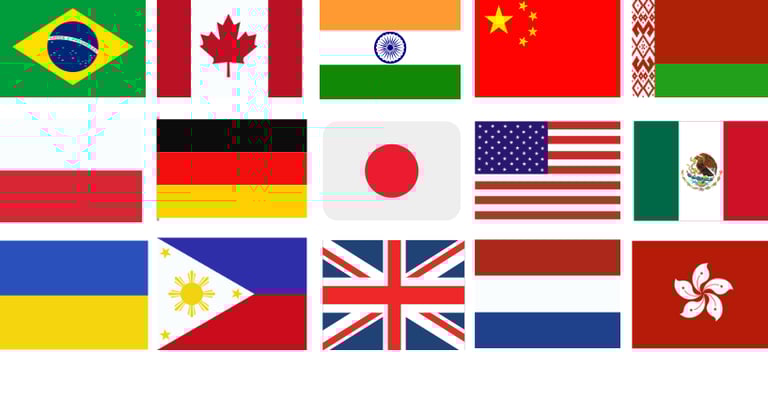
Early in my global operations career, I was proud of my communication style. Clear. Efficient. Get to the point. No fluff. It worked beautifully, until it didn't.
When I started working remotely with teams in Hyderabad and Katowice, I thought I understood professionalism. I had a framework that had served me well. What I didn't realize is that I was only fluent in one version of it.
My Indian colleagues would open every call with a few minutes of small talk. How's the family, how are you doing, what's going on with you. My instinct, at first, was to redirect. We have an agenda. Let's use the time. What I eventually learned is that those five minutes were the work. Relationship comes before task in many cultures, and skipping it doesn't make you efficient. It makes you cold. Erin Meyer talks about this beautifully in The Culture Map, the tension between task-based and relationship-based cultures, and how what reads as "professional" on one side of the world reads as dismissive on the other.
Poland was a different kind of adjustment. I traveled to Katowice thirteen times over eighteen months, and one summer I stayed long enough to feel the real rhythm of the place. My colleagues there were mostly Gen Z, sharp and pragmatic, with a healthy work-smarter-not-harder philosophy I genuinely came to admire. They'd joke that their national sport was complaining, and they weren't wrong, but it was a specific kind of complaining. Candid. Deadpan. Not actually negative, just real. Once I stopped reading it as disengagement and started reading it as honesty, everything clicked. And the more time I spent there, the more I saw what was underneath all of it: good, hearty people who were deeply proud of their country, their resilience, their culture. I fell a little in love with Poland. I joke now that after thirteen trips I became half-Polish, and honestly, I wear that with pride.
Germany added another layer. My colleagues in Duisburg were direct in a way that initially felt abrupt, but Meyer's framework helped me see it differently. They weren't being harsh, they were being precise. Learning to receive that without defensiveness, and to respond in kind, was its own cultural negotiation.
Here's what made this navigation possible for me: I grew up in Brazil, lived in Canada, and have spent my career speaking multiple languages, not just literally but culturally. Being a multicultural person didn't mean I had all the answers. But it meant I'd already been the person who doesn't fit the default. I knew what it felt like to adapt without erasing yourself. That muscle was already trained.
What I learned across Hyderabad, Katowice, and Duisburg wasn't a set of rules. It was a posture: curiosity over assumption, adaptation over imposition. It's why this work shows up in every cross-cultural workshop I run. Not as theory. As lived experience that I bring into the room.
What's a cross-cultural moment that changed how you communicate? I'd love to hear your story.
Fernanda Brasileiro
People Development Consultant & Strategist
CONNECT
© 2026. All rights reserved.
GET FREE DIAGNOSTIC